
Veo 4: The Moment AI Video Becomes a Production System

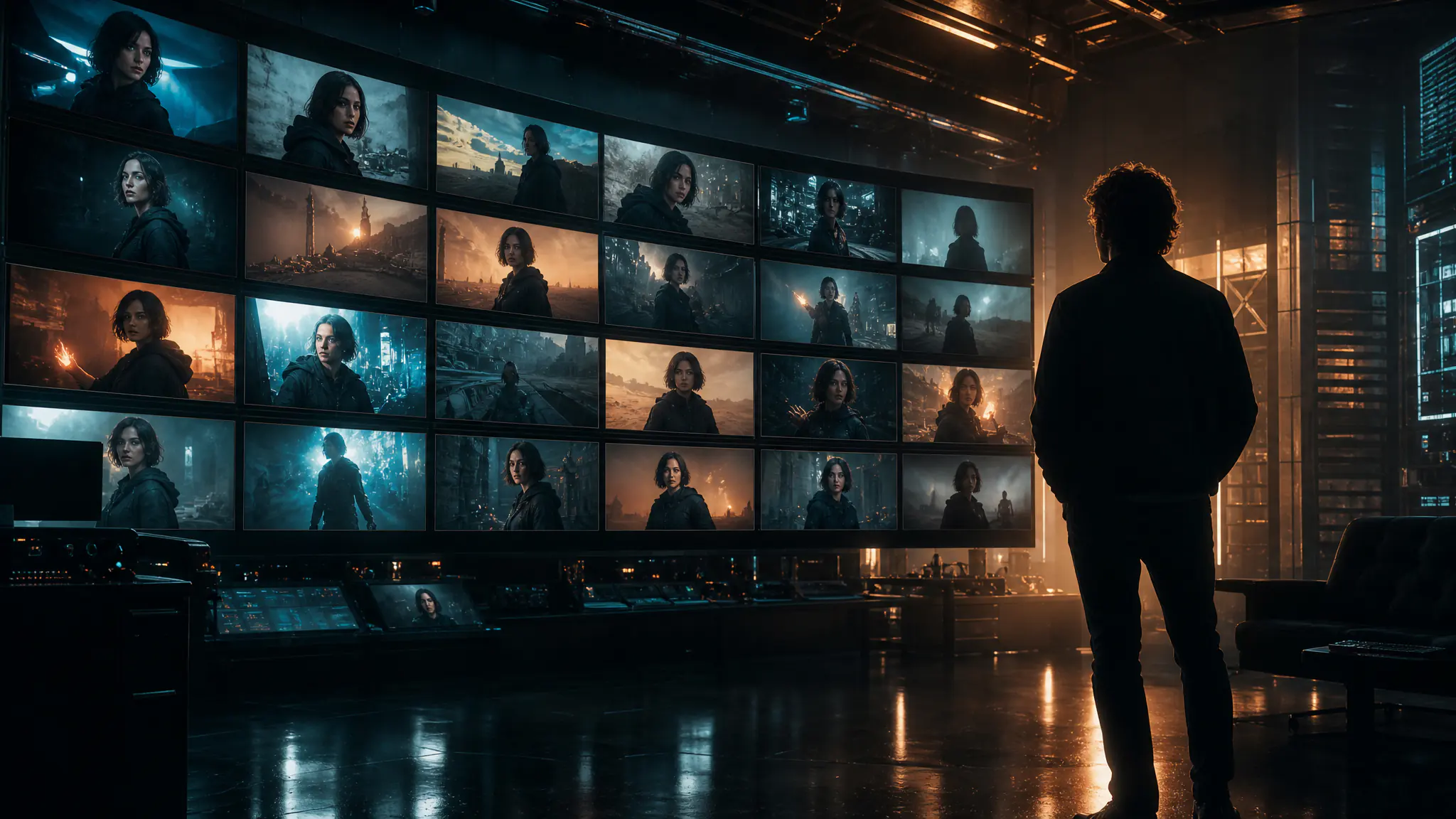
📌 Update: Veo 4 is now expected at Google I/O 2026 (May 19-20). 7ART will integrate Veo 4 on day one. Get notified when it's live →
The next Veo is coming, and it isn't going to be another point release.
Google has shipped a new Veo model at I/O two years running. Veo 1 in 2024. Veo 3 in 2025. Veo 3.1 dropped in January with mostly speed improvements. The cadence is set, the competitive pressure is intense, and the leaks have been steady. The next major release is close — and the creators preparing for it now are the ones who'll be shipping with it on day one.
But the more interesting question isn't when. It's what. The leaks, the documented limitations of Veo 3.1, and the gap left when OpenAI pulled the standalone Sora app in March all point to the same conclusion: Veo 4 is the moment AI video stops being a clip generator and starts becoming a production system.
Longer clips. Native 4K. Locked character identity across multiple shots. Storyboard-to-sequence generation. Explicit cinematography controls. Multi-stem spatial audio. If even half of these land, the workflow math for anyone making AI video changes overnight.
Here's everything we know so far — what's expected, what's plausible, and what you should be doing with the current generation while we wait.
A quick history: how we got from Veo 1 to today
Each Veo release has added one major capability and patched the limitations of the last. The pattern matters because it tells you what Google prioritizes — and what's still on the to-do list.
Veo 1 — May 2024 (Google I/O). The first major release. 1080p video from text prompts, clip lengths around 5–6 seconds, no audio. A strong opening, but the output felt like animated storyboards more than finished video.
Veo 2 — December 2024. The realism jump. Better physics, more cinematic lighting, partial 4K output in some tests. The motion finally looked like motion instead of a stylized approximation.
Veo 3 — May 2025 (Google I/O). The headline feature was native audio generation — dialogue, ambient sound, and music produced in a single pass with the video. This is what moved Veo from "interesting tech" to "actually usable for ads and short-form."
Veo 3.1 — January 2026. A speed and control release, not an architectural one. Same 1080p ceiling, same ~8 second clip length, but faster generation, start/end frame control, and tighter prompt adherence. Still the current production baseline for most workflows.
That's the cadence: roughly 5–7 months between releases, alternating between Google I/O drops (May) and year-end launches (December). Each version closes one major gap from the previous one — and each one leaves the next gap obvious.
Veo 3.1 is excellent at what it does. But if you've spent any time actually shipping with it, you know exactly where it stops:
- Clip length. 8 seconds is enough for a beat, not a scene. Anything narrative requires stitching multiple generations together.
- Continuity. Characters drift across shots. Costumes change. The same face becomes a different face two seconds later. This is the single biggest blocker for narrative work.
- Audio polish. Native audio is a leap, but the dialogue track still needs cleanup, the ambient often needs replacement, and there's no way to isolate individual stems.
- Resolution. 1080p is fine for social. Anything broadcast, billboard, or trailer-grade still needs an external upscale.
These aren't theoretical limitations. They're the four things every team building with Veo 3.1 has to work around — and they're exactly the four things Veo 4 is expected to fix.
Why the next reveal feels imminent
Three signals point to the same window.
The cadence. Veo 3.1 shipped in January. Google has never gone more than seven months between major Veo releases. The math gives you a window that's already opened and won't stay open for long.
The conference calendar. Google I/O is the company's biggest annual moment. The two largest Veo announcements — Veo 1 in 2024, Veo 3 in 2025 — both landed at I/O. Skipping it would be the surprise, not announcing.
The competitive pressure. OpenAI pulled the standalone Sora app in March, leaving a gap in identity-preserving video that everyone is racing to fill. ByteDance Seedance 2.0 is currently the motion-realism benchmark. Kuaishou Kling 3.0 keeps shipping. Google has every reason to push the next release sooner rather than later. We track every model release on the AI models hub.
On top of that, the leaks have been louder than usual. TPU clusters reportedly being scaled for native 4K output. Reference-embedding systems for character consistency. Multi-stem audio. None of it is on Google's official roadmap — but the same pattern preceded Veo 3's audio reveal in 2025, and that turned out to be accurate.
A reasonable caveat: AI release timelines slip. Features get delayed. Whole versions get quietly relabeled. Treat everything in this article as informed speculation, not confirmed product specs. The shape of what's coming is clear from the leaks and the trajectory. The exact day Google ships it is not.
What is clear: anyone in the AI video space who hasn't started planning for Veo 4 is already late.
Expected: Longer clips that hold their shape
The single hardest constraint in AI video right now is the 8-second wall. Every major model lives somewhere in the 4-to-10-second range per clip, and Veo 3.1 sits at 8. For social punchlines and product loops, that's fine. For anything narrative — a scene with two beats, an ad with a setup and payoff, a music video verse — it's a workflow problem you have to architect around.
Veo 4 is rumored to push single-shot generation into the 15–30 second range.
That sounds incremental until you actually think about what it changes. A 30-second clip isn't 4x more video than a 7-second clip. It's a completely different unit of work:
- A full ad in one pass, instead of three stitched segments
- A scene that can include a setup, an action, and a reaction
- A music video that can hold a verse without cutting
- A product walkthrough that doesn't break continuity mid-shot
This is also the feature most directly enabled by Google's compute advantage. Longer coherent generation isn't just a model decision — it's a memory and TPU question. NVIDIA has already demonstrated stable AI video output approaching one minute. The technical ceiling is moving, and Google's infrastructure means they can push against it harder than anyone else.
The catch: longer generations are more expensive, both in compute and in error surface. A 30-second clip that goes wrong at second 23 is a 30-second loss, not an 8-second one. Expect the actual usable length in practice to depend on how much control you have over what's happening across the clip.
But the floor is moving up. That alone reshapes how creators plan content.
Expected: Native 4K, not upscaled 4K
Most "4K" AI video you see today is upscaled from 1080p. It looks sharper than the source, but it doesn't carry actual 4K detail — the model never generated that level of resolution. For social, the difference doesn't matter. For anything broadcast-grade, billboard-grade, or trailer-grade, it does.
Veo 4 is expected to generate native 4K — meaning the model actually produces frames at 3840×2160 instead of inferring them from a smaller source.
The infrastructure signal here is the loudest part of the rumor mill. Google's TPU clusters are reportedly being scaled specifically for higher-resolution video generation. That's an expensive move; you don't reserve that kind of compute for a feature you're not shipping.
Native 4K unlocks three categories that AI video currently can't credibly serve:
- Premium stock footage. Agencies need 4K-or-higher source files. They can't buy 1080p and upscale.
- Trailer and pre-roll content. Cinematic delivery specs require true 4K.
- Out-of-home and billboard. Anything large-format needs native resolution to hold up at scale.
Pricing-wise, expect a premium tier for 4K generation. The per-second cost will almost certainly be higher than 1080p output, and the generation time longer. Most workflows will still default to 1080p for iteration and lift to 4K only for final delivery — but having both options in the same model is what matters.
Expected: Locked character identity across shots
This is the feature that matters most.
The single biggest reason most AI video projects fall apart in production is that characters drift. You generate a hero shot of your protagonist. It's perfect. You generate the next clip in the sequence — same prompt, same description, same wardrobe — and it's a different person. Different face. Slightly different hair. A jacket that's blue instead of navy. The model has no memory of the previous generation; it's regenerating the character from text every time, and text descriptions can't pin identity precisely enough.
This is the problem that's gated AI video from real narrative production for two years. And Veo 4 is expected to solve it.
The rumored approach is a reference-embedding system: you upload 3–5 reference images of a character (or product, or object), and the model locks that identity across every shot you generate. Different angles. Different lighting. Different scenes. Same character.
If that lands as described, it changes what AI video can be used for:
- Narrative shorts and ads can finally feature recurring characters across scenes without manual frame-by-frame correction
- Brand assets stay on-model — your product looks like your product, not a slightly-different product
- Episodic content becomes possible — same protagonist across multiple videos
- AI influencers and creators get true visual continuity instead of "close enough"
This was one of Sora 2's strongest features before OpenAI shut down the standalone app in March. The Cameo system Sora introduced was the first credible answer to identity drift, and its removal left a gap that Google clearly wants to claim.
But here's the deeper point most creators haven't internalized yet: text-only prompts will never lock identity reliably. Words can describe a person, but they can't define a person. That's a property of the generation pipeline, not a prompt-engineering problem you can solve by writing better prompts.
The fix is what Veo 4 is reportedly building toward — and what some platforms have already implemented across more than just video. A character that exists as a saved object, not a description. An identity that gets passed into the model, not interpreted from words.
This is the part of Veo 4 worth getting ready for. Because the workflows it unlocks aren't incremental.
Design your AI artist in eight steps – face, style, music genre, voice – then use them across images, videos, music, and lipsync.
Expected: Storyboard-to-sequence generation
Today's AI video tools generate one clip at a time. You prompt, you wait, you get a clip. If you want a multi-shot sequence, you generate each clip separately and stitch them together in an editor.
Veo 4 is expected to support structured multi-scene generation from a storyboard or script input. Feed it a sequence — three shots, five shots, a one-page script — and the model produces the whole thing as a coherent multi-shot output, not as isolated clips that happen to be next to each other.
This is the feature that independent filmmakers have called out as the biggest unlock in their workflow. Translating a written script into a visual sequence is the single most labor-intensive part of pre-production. Manual storyboarding takes days. Hiring a storyboard artist is expensive. Even rough animatics require time and coordination. A model that can read a script and produce a working visual sequence shortcuts all of that.
The implications across categories:
- Filmmakers get a usable animatic in minutes instead of weeks
- Marketing agencies can deliver a full narrative ad as one generation, not a stitching project
- Educators and explainer producers can map a structured outline directly into video
- Solo creators can produce content that previously required a team
Combined with longer single-shot clips and locked character identity, multi-scene generation is what completes the production system. You can now produce a coherent multi-shot piece, with the same protagonist throughout, where each shot is long enough to actually mean something.
That's not a faster way to make AI clips. It's a different kind of tool.
Expected: Cinematography as a first-class input
Today, you ask AI video for "a slow camera move toward the subject" and you get the model's interpretation of what that means. Sometimes it's a dolly. Sometimes it's a zoom. Sometimes it's the camera staying still while the subject does something subtle.
Veo 4 is rumored to accept explicit cinematography commands as structured inputs — not as language to interpret, but as direct instructions to execute:
- Slow dolly in
- Whip pan
- Rack focus
- Orbital shot around subject
- Crane up
- Push-out reveal
If this lands, the shift from "interpretation" to "direction" is significant. Right now, getting a specific camera move out of any AI video model is a prompt-engineering exercise — you stack cinematography vocabulary into the prompt and hope the model translates it correctly. With explicit camera-control inputs, that hope becomes a setting.
This matters most for two workflows:
- Cinematic short-form. The thing that separates good Kling output from great Kling output is cinematography vocabulary. If you can drop that into a structured field instead of buried in a 100-word prompt, the floor of "what's possible without prompt expertise" rises a lot. See our breakdown of Kling 3 prompt patterns for the vocabulary that'll transfer most directly.
- Sequence consistency. When you're generating multiple shots that need to feel like part of the same piece, controlled camera moves are what tie them together. Inconsistent camera language breaks immersion even when characters and lighting are locked.
This is the upgrade that turns Veo into something a director can actually use, not just a creative prompter.
Expected: Audio that comes out as a soundstage
Veo 3's killer feature was native audio. Veo 4's killer audio feature is rumored to be separated stems.
Right now, Veo 3.1 generates audio as a single mixed track — dialogue, ambient, and music baked together. That's enough for casual social content, but it's a problem for anything you need to edit. Want to swap the music? Re-record a line of dialogue? Add a sound effect with the right spatial placement? You can't, because the elements are fused.
Veo 4 is expected to output audio in separated stems: dialogue on one track, ambient on another, sound effects layered with directional cues that follow camera movement. Effectively, a soundstage in a single generation.
The directional part is the more interesting half. Audio that knows where the camera is pointing — and adjusts spatial positioning as the camera moves — closes the gap between AI-generated video and traditionally produced video at the post-production level. You're no longer fighting the model's audio choices; you're treating the output as a multi-track project file.
For anyone doing serious post — color grading, sound design, music replacement — this is the difference between AI video as a draft and AI video as a finished asset.
The competitive landscape Veo 4 is entering
Veo 4 isn't launching into an empty market. The AI video space in 2026 has more credible production-grade models than at any point in its history. Here's where the field stands as Veo 4 prepares to land:
ByteDance Seedance 2.0 is the current motion king. Hollywood-grade color, physically grounded movement, the most temporally consistent output in the category. If you're producing character-driven stories, sports footage, or anything where motion realism makes or breaks the shot, Seedance is the reach. Veo 4 needs to match or beat it on motion to take the technical crown.
Kuaishou Kling 3.0 owns camera control and speed. Fast 1080p generation, the most mature cinematography vocabulary, deep prompt-engineering culture around it. Kling has become the go-to for cinematic short-form, and its grip on that segment is strong. Veo 4's explicit camera controls — if they ship as rumored — are aimed squarely at this territory.
Veo 3.1 is the current polish leader. Native audio integration, the strongest prompt adherence in the category, and Google's full multimodal stack underneath. It's the model that most agencies default to for branded content because it produces the most "finished-looking" output without much intervention.
OpenAI's Sora is the ghost in this market. The standalone app shut down in March, and the Cameo character-consistency feature that everyone loved went with it. Sora's exit didn't shrink the market — it concentrated it. Every model still standing is racing to claim the workflows Sora was best at.
Wan 2.7 is the enterprise dark horse. A multimodal director model targeted at large production teams, less consumer-visible but technically strong on long-form coherence.
For Veo 4 to take the crown, it needs to win on at least three of four axes: motion realism (to dethrone Seedance), character consistency (to fill Sora's gap), production length (to push past everyone), and output quality (to keep its polish lead). The features rumored to be in the release map onto exactly those four axes — which is either a coincidence, or a roadmap.
What you should be doing right now
The mistake most creators are about to make is treating Veo 4's launch as the moment to start preparing for it. By then it's too late — the ones already using the current generation effectively will ship with the new model on day one, and everyone else will spend the first month figuring out their workflow.
Three things worth doing before Veo 4 lands:
Build a character system you control. Veo 4's character-consistency feature is going to require reference inputs. Start now: build a set of reference images for any character, product, or asset you'll want to use in video. Get them in a saved, reusable format, not as one-off prompts. Platforms that already support this kind of virtual artist system give you a head start the moment Veo 4 ships.
Develop a prompt library for cinematography. Whether camera controls become structured inputs or stay in the prompt body, the vocabulary you've built around dolly moves, lens choices, lighting setups, and shot framing will transfer directly. Test patterns now on the current generation of models so you know what works.
Plan content as sequences, not single clips. Storyboard-to-sequence is one of Veo 4's headline rumored features. If your content today consists of disconnected 8-second clips stitched together, you're working at the unit Veo 3.1 forces on you. Start designing shots as scenes — multi-shot narrative pieces with character continuity. That's the unit Veo 4 will work in.
The shift isn't "wait for the new model." It's "start working in the structure the new model will reward."
What Veo 4 actually represents
Strip away the feature list and the question becomes simpler.
For two years, AI video has been a clip generator. You prompt, you get a clip, you stitch the clips together into something larger. Every workflow built around AI video has been shaped by that constraint — short clips, no character memory, no audio control, no real sequence structure. Creators have done astonishing work inside those limits, but the limits were real.
Veo 4 is the version that removes those limits all at once. Longer clips, locked character identity, structured multi-shot generation, native 4K, real cinematography controls, separable audio. Not as six unrelated upgrades, but as one architectural shift: AI video stops being a generator and starts being a production system.
That's why this release matters more than the version number suggests. Veo 4 isn't a faster Veo. It's a different category of tool.
The creators who recognize that and start working in the structure of a production system today are the ones who'll dominate the first six months after launch. Everyone else will spend that time catching up.
The window to get ready is open. The question is whether you use it.
Animate your AI artist into Reels, TikToks, ads, and cinematic clips. Nine state-of-the-art video models, sound included, every aspect ratio – in one place.
Stop waiting for Veo 4 to fix character drift
On 7ART, you build a virtual artist once — face, voice, music genre, style — and that identity stays locked across every image, every video, every song, and every lipsync clip you generate. Veo 4 is rumored to bring locked character identity to video. 7ART has it across the entire creative stack.
The creators who'll be ready for Veo 4 are the ones already working with locked character identity today. Start there.
Try the tools mentioned

AI Artist Generator
Design your AI artist in eight steps – face, style, music genre, voice – then use them across images, videos, music, and lipsync.
AI Video Generator with Character Consistency
Animate your AI artist into Reels, TikToks, ads, and cinematic clips. Nine state-of-the-art video models, sound included, every aspect ratio – in one place.
AI Image Generator with Character Consistency
Create your AI artist once, then generate every image around them. Multiple state-of-the-art models, every aspect ratio, every style – in one place.
Frequently asked questions

Ilyas I
Covers AI model releases, head-to-head comparisons, and deep technical breakdowns of image, video, and music generators. Part of the 7ART team.
Stay updated
Newsletter signup coming soon.
Continue reading
Kling 3.0 vs Veo 3: Which AI Video Generator Wins in 2026?
A side-by-side comparison of the two leading AI video models. Real prompts, real outputs, honest verdict.
 Ilyas I·Apr 28, 2026
Best Kling 3.0 Prompts for Cinematic AI Videos in 2026
A curated collection of Kling 3.0 prompts that produce cinematic, high-quality AI video. Plus prompt structure templates you can adapt.
Ilyas I·May 5, 2026
Nano Banana 2: Everything You Need to Know About Google's Latest Image Model
A deep technical and creative look at Nano Banana 2 — what it can do, how it compares to Midjourney and Flux, and how to get the best results.
Ilyas I·May 2, 2026